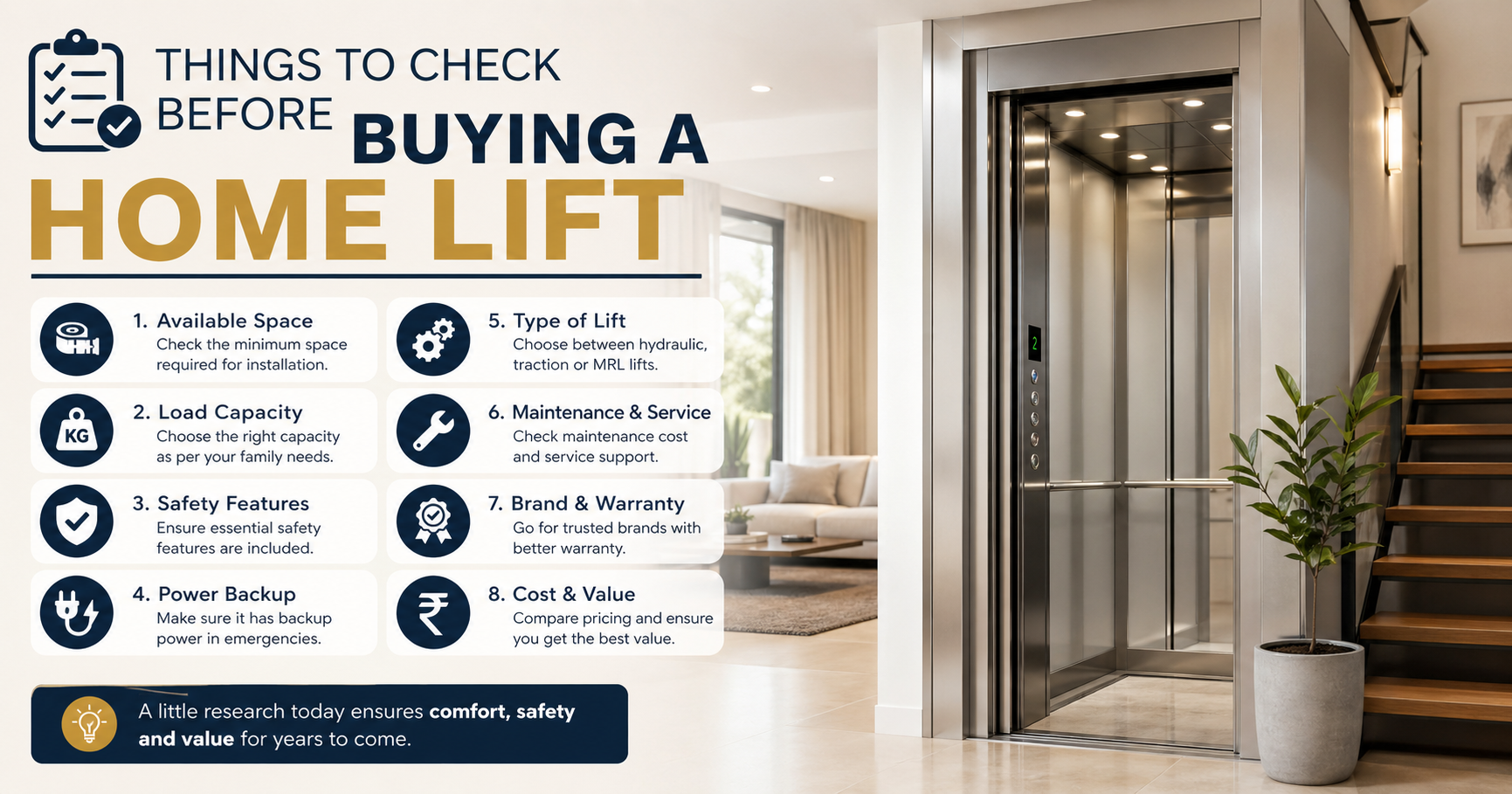
Installing a lift in your home is no longer just a luxury statement. In 2026, it has become a smart investment and a vital necessity for the elderly. However, buying a home elevator isn’t as simple as purchasing a refrigerator or an AC. It involves a detailed process of technicalities, safety regulations, and structural requirements.
If you are planning to install a lift in your home or builder floor, do not make a decision in haste. We have prepared this comprehensive checklist to help you choose a lift that is both right for your space and safe for your family.
1. Identify Your Primary Purpose and Application
Before looking at models, ask yourself: "Why do I need this lift?"
Elderly Mobility
If the primary goal is to help parents with knee pain, you need a lift with a soft start/stop feature that stops exactly at floor level without jerks.
Luxury & Aesthetics
If you want to enhance the architectural beauty of your villa, panoramic glass elevators are the best choice.
Future-Proofing
If you are young but planning for the long term, opt for a low-maintenance, heavy-duty system.
2. Understand the Technical Drive Systems
Home lifts primarily run on three types of technology. Your home’s structure will determine which one is right for you.
Pneumatic Vacuum Lifts
These are powered by air pressure. The biggest advantage? They require no pit (digging) or hoistway. They offer a 360-degree view and fit into very compact areas.
Hydraulic Lifts
These are extremely quiet and offer a first-class, smooth ride. They require a small cabinet for the oil tank but usually do not need a massive machine room.
Traction (MRL) Lifts
Machine Room-Less traction elevators are ideal for homes with high usage. They are fast, energy-efficient, and very durable.
3. Assess Space and Pit Requirements
Check the physical limitations of your home before finalizing a purchase.
The Pit
Does your floor allow for 1–2 feet of digging? If not, you must opt for a pitless lift (such as vacuum or screw drive models).
Overhead Space
Measure the height from the top floor to the ceiling. Some elevators require 10–12 feet of overhead clearance.
Footprint
A standard 2-passenger lift typically requires at least a 3x3 feet area. Measure the gap in your stairwell or the corner of your balcony carefully.
4. Non-Negotiable Safety Features
Safety is the most critical part of an elevator. Never buy a lift without these features.
Automatic Rescue Device (ARD)
If the power fails while the lift is moving, the ARD brings the lift to the nearest floor and opens the doors automatically. In 2026, this is a mandatory safety feature.
Emergency Phone & Alarm
There must be an active intercom system inside the lift connected directly to security or a family member.
Infrared Door Sensors
These detect if a child or an object is in the doorway, preventing the doors from closing and stopping the lift immediately.
Manual Lowering Valve
In an emergency, there should be a manual way to lower the elevator from the outside.
5. Certification and Compliance
Avoid local vendors who "assemble" lifts using unbranded parts. Always verify the following.
- European Standards (CE): Does the lift comply with international safety standards?
- ISI Mark: Are the components certified by Indian standards?
- Manufacturer Credibility: How long has the company been in the market? A reputable manufacturer like DNA Home Solutions ensures long-term reliability.
6. Civil Work and Installation Timeline
Sometimes a lift seems cheap, but the cost of civil work (construction/breakdown) can be very high.
Self-Supporting Structure
Always choose a lift that comes with its own steel or aluminum shaft. This prevents you from having to build heavy concrete beams into your walls.
Installation Duration
A professional company should complete the installation within 7 to 15 days. If a vendor asks for months, their process is likely inefficient.
7. Customization and Aesthetics
Your home is your pride, so the lift should match your style. Ask your provider for:
- Cabin Finish: Options like stainless steel, gold finish, or premium wooden interiors
- Flooring: Can you use the same marble or granite used in your home flooring inside the lift?
- Lighting: Choices between LED spotlights or ambient mood lighting
8. Power Consumption and Efficiency
Modern home elevators no longer require heavy 3-phase industrial connections.
Single Phase Operation
Check if the lift can run on the same power as your AC or geyser.
Standby Mode
Ensure the lift automatically turns off the lights and fan when not in use to save on monthly electricity bills.
9. After-Sales Service and Maintenance (AMC)
Buying an elevator is a one-day task, but running it is a lifelong commitment.
Response Time
If the lift gets stuck, how fast can a technician arrive? Ideally, under 2 hours.
Spare Parts
Does the company keep local stock, or do they import parts every time there is a breakdown?
AMC Cost
Clear the Annual Maintenance Contract costs in advance. It should generally stay within 1–2% of the total lift cost.
10. Budget: Beware of Hidden Costs
Many vendors lure customers with a lowest price tag but add hidden costs later. Demand a transparent breakup of:
- Transportation & Octroi: Cost of bringing the lift from the factory to your doorstep
- GST (18%): Ensure the quoted price includes mandatory taxes
- Civil & Electrical Work: Clarify whether the seller will build the shaft or if you need separate contractors
Final Thoughts: Checklist Summary
Installing a home lift is an emotional decision—you are placing your family’s safety in someone’s hands. Avoid the temptation of local assembly lifts just to save a few thousand rupees. A branded, certified lift provides the peace of mind you deserve.
Quick Action Plan
- Request a site survey: Invite an expert to evaluate your home
- Compare quotes: Get references from at least 3 vendors
- Visit a live project: Always see a finished installation before signing the contract
Interactive FAQ
Q: Does a home lift require a license in Delhi NCR?
A: While rules vary by specific municipality, most private residential lifts require a structural stability certificate rather than a commercial license. Always check with your local authority or your provider, such as DNA Home Solutions, for the latest 2026 guidelines.